Preparing a Company for Sale: The 12-Month Checklist That Raises the Price
Buyers ran their own due diligence in 83% of Baltic private deals. Here is what they look for, month by month, and how each fix translates into a better price or a cleaner closing.

The difference between a company that sells quickly at a full price and one that limps through a year of negotiations is almost always preparation. Buyers are not paying for potential; they are paying for evidence. This checklist is organised backwards from a target closing date twelve months out, and it applies equally to an Estonian OÜ, a Latvian SIA or a Lithuanian UAB.
Months 12–10: the numbers
Normalise EBITDA. Every private company's accounts contain items a buyer will adjust. The classic ones: the owner's salary set for tax reasons rather than market rate, family members on the payroll, a company car or two, one-off legal costs, a bad debt written off, rent paid to a related company at a non-market rate. Write each adjustment down with the amount and the reason. A buyer will do this anyway – doing it first means you control the narrative.
Separate the property. If the company owns its premises, decide whether the buyer gets the building or a lease. Many Baltic SME sales are structured with the property kept by the seller and leased back, which lowers the price a buyer needs to finance and gives the seller an income.
Check the tax position. In Estonia, undistributed profit is untaxed until paid out (22/78 since 2025); in Latvia distributed profit carries 20/80; Lithuania taxes profit annually at 17% from 1 January 2026 (with a 7% rate for small companies under EUR 300,000 of income). Cash trapped inside an Estonian or Latvian company is worth less than face value to a buyer – plan distributions accordingly.
Months 9–7: the business without you
Reduce key-person risk. Ask a simple question: which customers would call you if something went wrong? Those relationships need a second contact inside the company. The same applies to suppliers and to the bank.
Formalise the second tier. A production manager, a sales lead and someone who owns the numbers. Written job descriptions and, where appropriate, retention bonuses tied to a change of control.
Document the processes. Pricing rules, quality procedures, the sales pipeline. A buyer who sees a company that runs on documented processes pays for a system; one who sees a company that runs on the owner's memory pays for a risk.
Months 6–4: contracts and compliance
Customer contracts. Check for change-of-control clauses that let a customer walk away when ownership changes. Where they exist, decide whether to renegotiate now or manage them in the deal.
Employment. Contracts signed, holidays accrued and recorded, no disputes pending. In the Baltic deal-points study, employee-related warranties are standard.
Licences and permits. Are they held by the company or by you personally? Licences in the owner's name are a recurring closing problem.
Intellectual property. Trademarks registered to the company, not the founder. Domain names, software licences and the website in the company's name.
Months 3–2: the data room
Assemble a virtual data room before you go to market: three years of annual reports, monthly management accounts, the normalisation schedule, customer revenue by year, the fixed-asset register, all material contracts, employment summaries, permits, insurance policies and any litigation. In the Sorainen study, buyers conducted due diligence in 83% of deals and asked for a locked-box price mechanism in 31% – meaning the price is fixed at a past balance sheet date and the buyer takes economic risk from that date. That only works when the accounts at the lock date are clean.
Month 1: go to market
Prepare a one-page anonymous teaser and a fuller information memorandum released under NDA. List anonymously – our Sell a business page describes the NDA-first process – and decide in advance who will handle enquiries so that you can keep running the company.
What terms to expect
The Baltic data is clear on the shape of a typical deal: all-cash consideration in 93% of transactions, earn-outs in only 8%, a seller non-compete in 64%, warranty and indemnity insurance in just 2%. Expect to give warranties yourself and to negotiate their cap (often a percentage of the price) and duration (commonly 18–24 months for general warranties, longer for tax).
Illustrative before-and-after
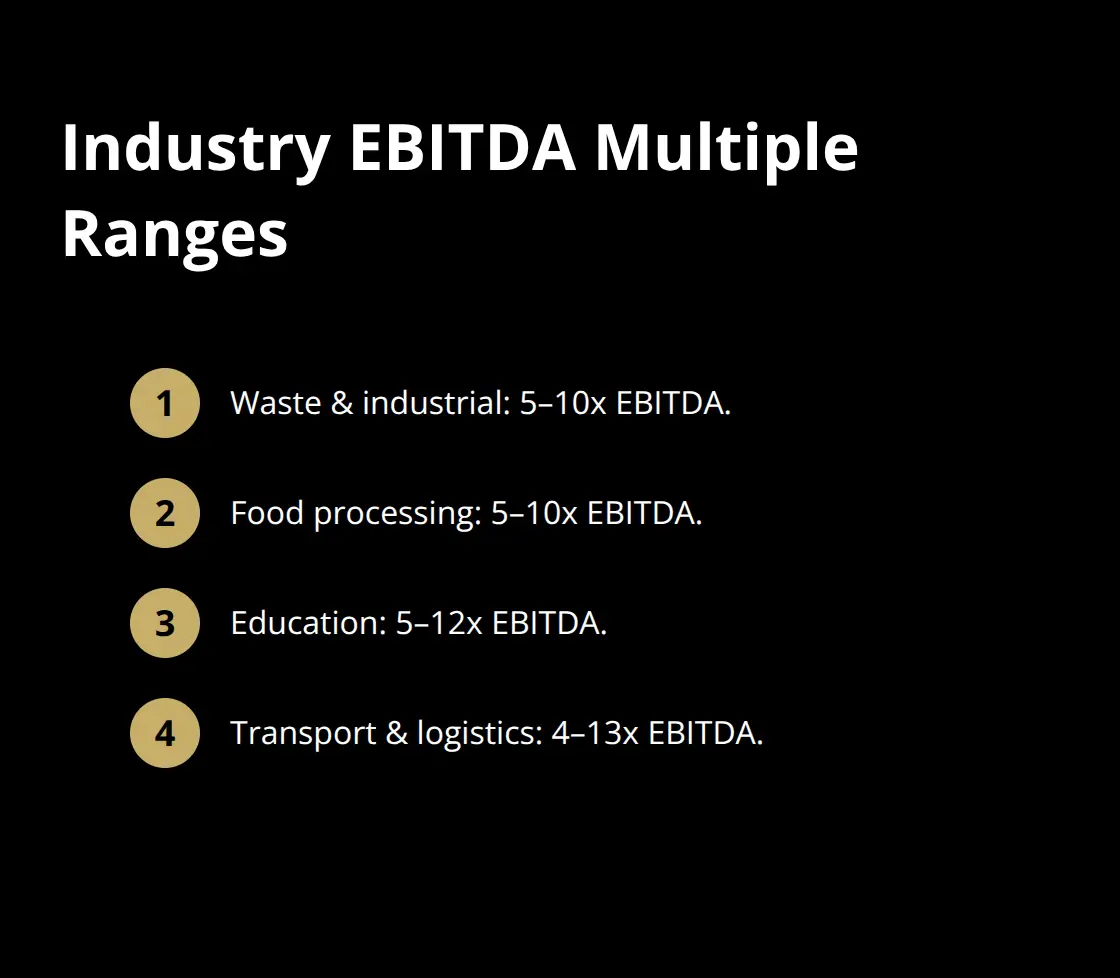
Illustrative example with hypothetical figures. A Vilnius logistics company reports EUR 380,000 EBITDA. The owner pays himself EUR 24,000 a year; a market-rate replacement would cost EUR 60,000. He also runs EUR 30,000 of personal vehicle costs through the company and took a EUR 45,000 one-off hit from a customer insolvency. Normalised EBITDA: 380 − 36 + 30 + 45 = EUR 419,000. At a 5x multiple – close to the 5.2x CEE SME average reported by Dealsuite for H1 2025 – the normalisation alone moves the indicative value from EUR 1.9 million to just under EUR 2.1 million. Documenting it took an afternoon.
Checklist summary
- Normalisation schedule written and evidenced
- Property decision made
- Key customer and supplier relationships shared with a second person
- Second-tier management in place with retention terms
- Change-of-control clauses identified
- IP, licences and domains in the company's name
- Data room populated
- Anonymous teaser and NDA process ready
Test the indicative value of your company with our free valuation tool, or talk to our team about timing.
The five things that most often chip the price
Preparation is easier to justify when you know what it prevents. In practice the same handful of issues come up again and again in Baltic SME transactions, and each of them is fixable in advance:
- Customer concentration. One client at 40% of revenue converts a valuation discussion into a risk discussion. You cannot always fix it in a year, but you can show a trend, lengthen the contract, and demonstrate that the relationship sits with the company rather than with you personally.
- Undocumented arrangements. The handshake lease with a relative, the verbal discount to a long-standing customer, the bonus scheme nobody wrote down. Every one of them becomes a warranty request.
- Property inside the trading company. It inflates the price, complicates financing and pushes the buyer towards an asset deal. If the property is genuinely part of the business, price it separately; if it is not, separate it — but do it early, because an intra-group lease signed weeks before a sale invites scrutiny.
- Tax positions that were never tested. Aggressive expense treatment, cars, unreported benefits. A buyer will price the exposure at more than it would ever cost you, because they cannot quantify it.
- Working capital drift. A locked-box price that ignores a seasonal cash cycle leaves the buyer short in month one and you arguing in month three. Produce a twelve-month working-capital profile as part of the pack.
What preparation is actually worth
Take a company with EUR 400,000 of normalised EBITDA. At a mid-market multiple of roughly five times, that is EUR 2 million of enterprise value, and every 0.5x of multiple is EUR 200,000. Preparation moves the multiple through exactly the levers above: reduced key-person risk, verifiable numbers, contracted revenue, no unpriced tax tail. It also shortens the process, and time is where deals die — momentum lost during a six-week gap for missing information rarely comes back.
The other half of the return is negotiating position. A seller with the file ready can run a competitive process on a defined timetable. A seller assembling documents while a single buyer waits has already conceded the leverage.
Sources
- Sorainen, Baltic Private M&A Deal Points Study 2024 – https://www.sorainen.com/wp-content/uploads/2024/10/Baltic-Private-MA-Deal-Points-Study-2024.pdf
- Dealsuite, CEE M&A Monitor, August 2025 – https://www.dealsuite.com/en/blogs/cee-m-a-monitor-august-2025
- Grant Thornton, Pan-Baltic tax system comparison – https://www.grantthornton.ee/en/services/tax/pan-baltic-tax-system-comparison/
- Sorainen, Taxes in a Nutshell 2025 – https://www.sorainen.com/wp-content/uploads/2025/02/Sorainen.Taxes-in-nutshell_2025.pdf